It's a Bird!
It’s a bird, it’s a 3D plane, it’s Phoebe
I’ve been sketching Phoebe on whiteboards for a week. Horizontal body, soil prong underneath, leaf sticker off the side. I know what the guts look like. I have no idea what the bird looks like.
I can’t draw. I can’t sculpt. I can barely operate a pencil. But my sister can. She’s the one who got the art genes. I got the “take things apart and sometimes put them back together” genes. Between us we cover most of the bases, as long as you don’t need us in the same room.
She lives 500 miles away. I called her, described what Phoebe needed to be (small bird, perches horizontally, sits on a stick, roughly the size of an 18650 battery), and asked if she’d sculpt a clay model. She said yes. Her husband, who has been extraordinarily patient with this project, agreed to photograph it.
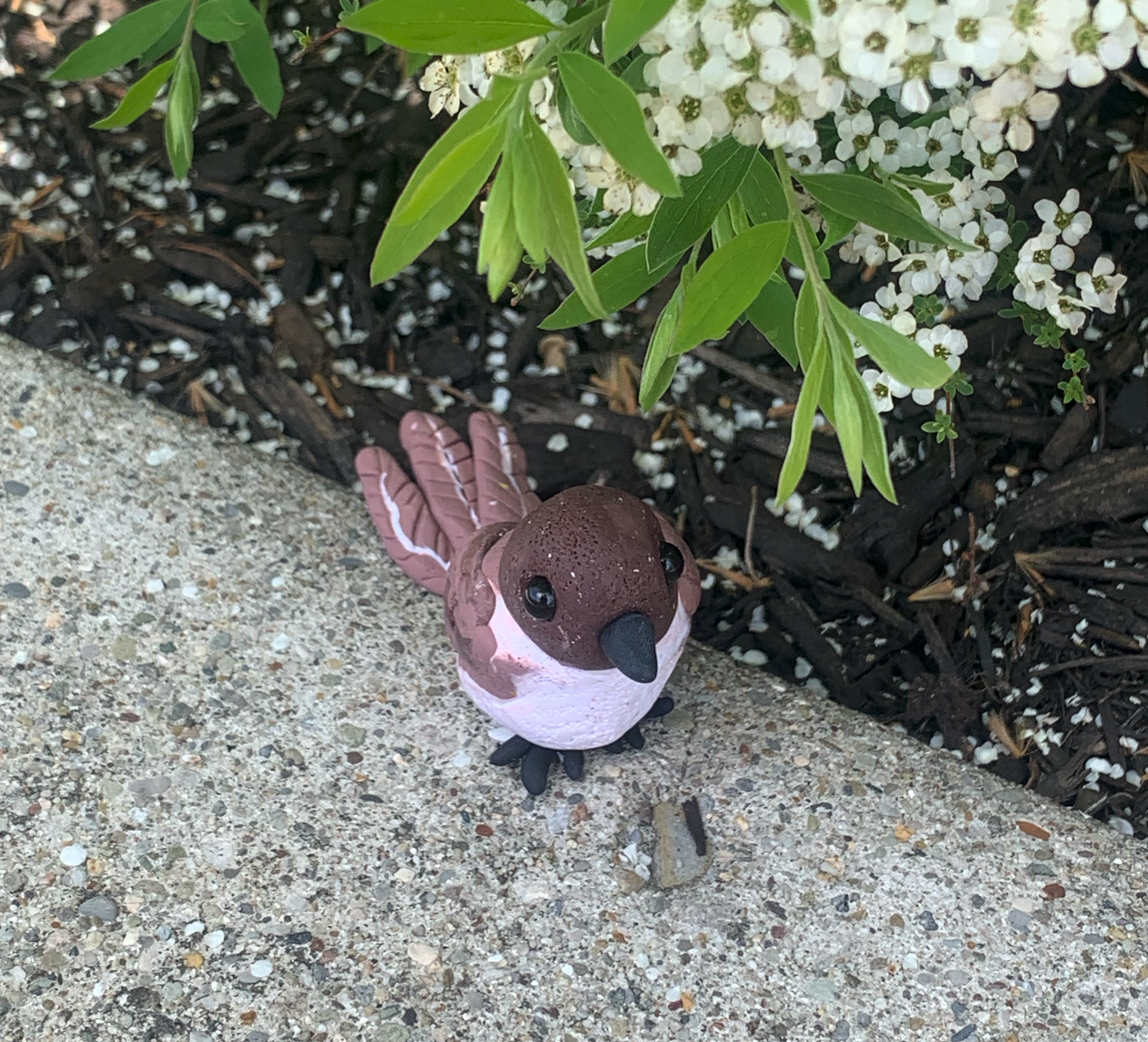
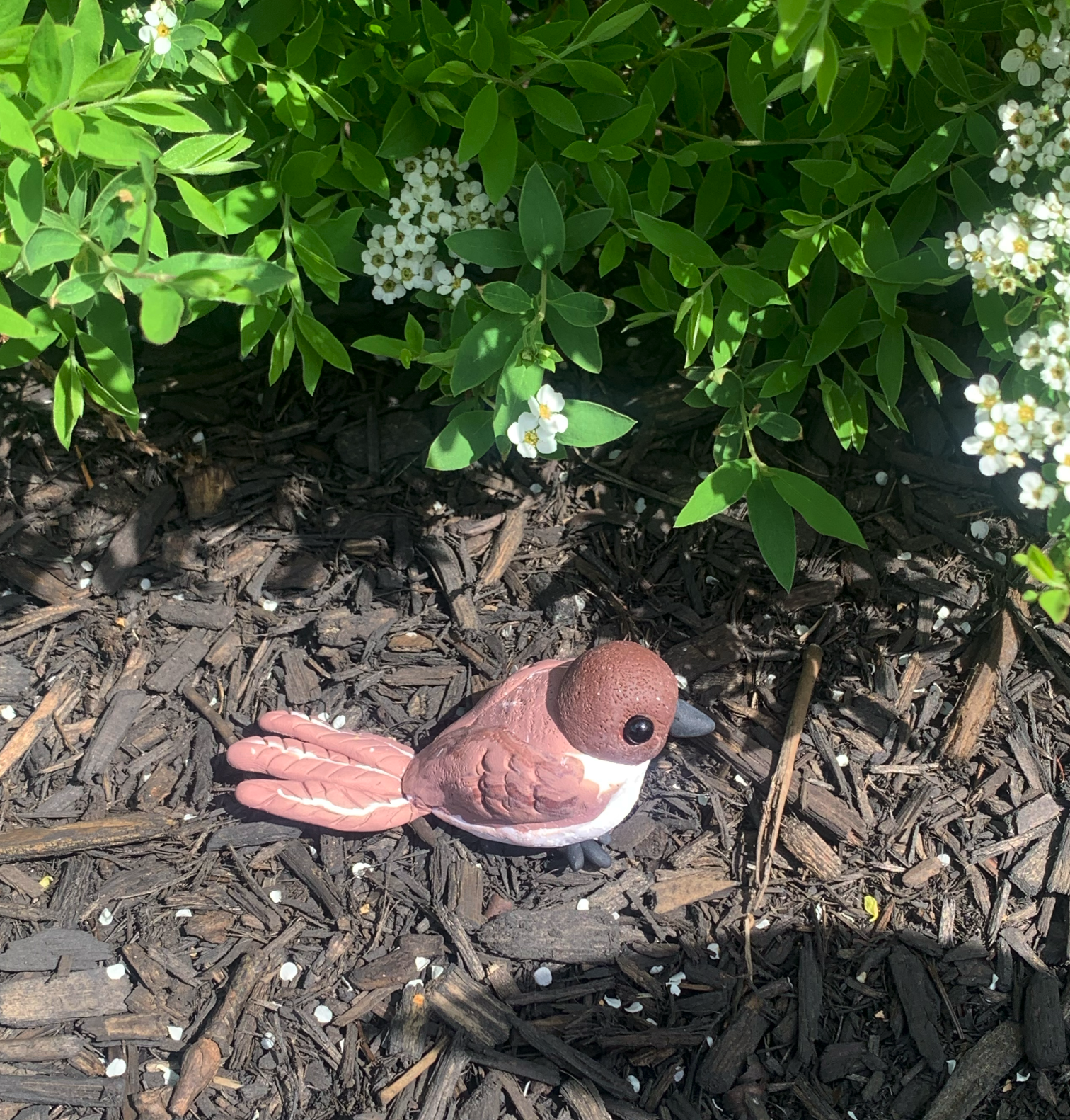
The turntable
The photos needed to work for photogrammetry, which means dozens of shots from every angle with consistent lighting and overlap between frames. A professional would use a motorized turntable and a calibrated lighting rig. I told them to use a record player, not having the spatial reasoning to realize that doesn’t work well with a backdrop.
Her husband set the clay bird on a bedsheet with a magnifying lamp and a quarter for scale. The plan was to use a record player as a turntable. The reality was rotating it a little bit by hand, taking a photo, rotating it again, and trying not to screw up. Then he tilted the camera angle and did it all again. And again. Several dozen photos of a small clay bird being very carefully nudged in a circle.
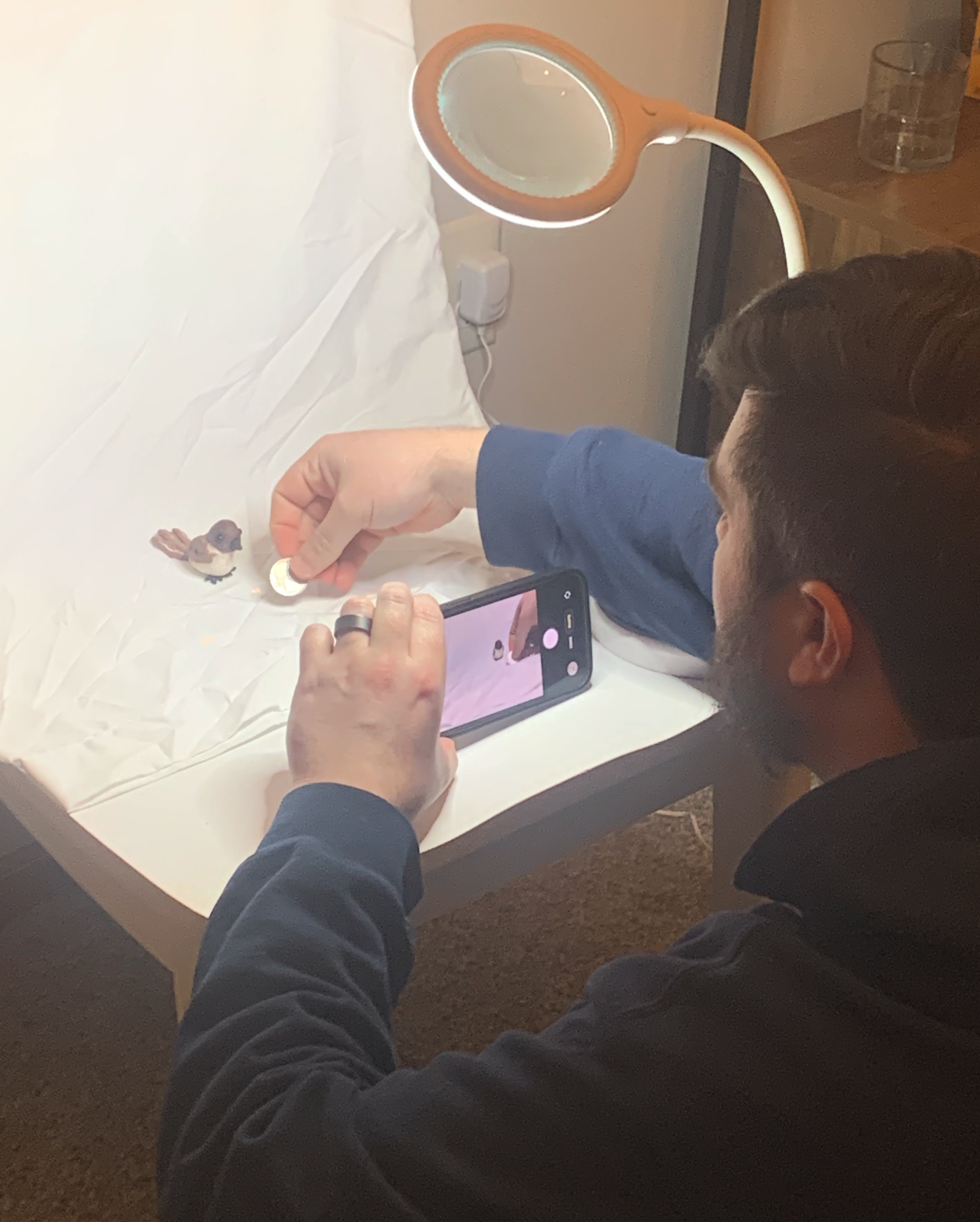
Again, I don’t think he understood the family he married into.
ClayArgus
The photos needed to become a 3D model. Could I have used one of the dozens of photogrammetry services ranging from free to almost free? Sure. But I’ve been watching too many episodes of Expedition Unknown where Josh Gates and a crew of professional archaeologists use million-dollar Leica scanners to photogrammetry-scan ancient ruins. If they can do it with a scientific survey team and a six-figure budget, surely we can do it with an iPhone 14 and some grit. Where’s the fun in using someone else’s pipeline.
So I built ClayArgus as a side quest. It takes a folder of photos and produces a Fusion 360-ready mesh. It culls blurry and overexposed shots, auto-crops to the subject using Apple Vision, detects scale references in the photos (coins via Hough circles, or, because the internet demands it, bananas via YOLO), generates a preview of the camera path, runs Apple’s Object Capture for the 3D solve, then decimates and repairs the mesh with PyMeshLab. Photos in, .obj out. Everything runs locally on Apple Silicon.
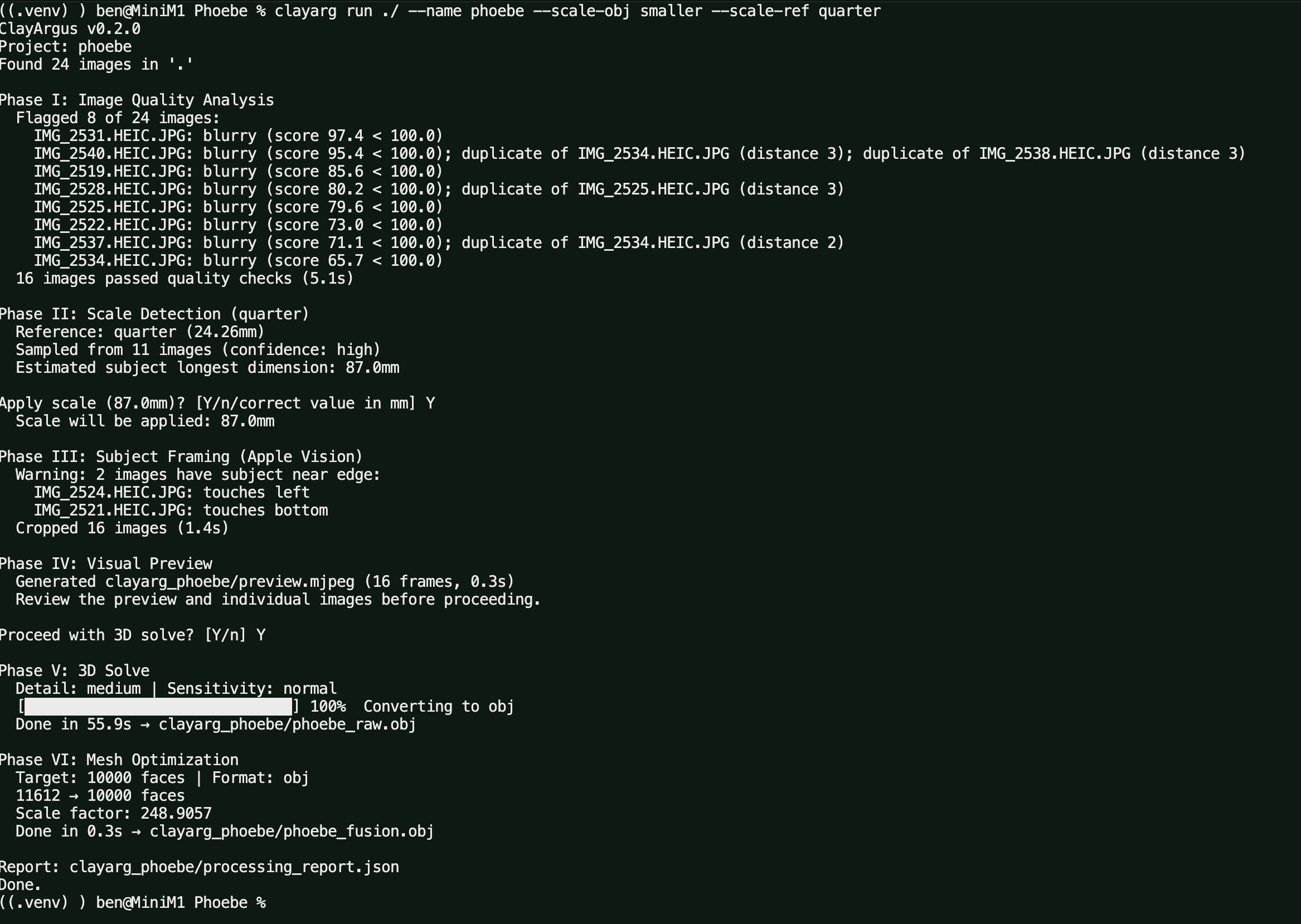
The Python side was straightforward. Rendering a photogrammetric 3D model from photos? Magically easy. The Swift CLI that wraps Apple’s Object Capture API nearly broke me. Apple’s frameworks will hand you a miracle and then make you fight for two hours to cleanly exit an async subprocess. Also, the M1 chewed through photogrammetry like it was a spreadsheet. This is a consumer chip from 2021. What are they putting in these things. It is available at clayarg.us because of course I bought the domain. It was three dollars.
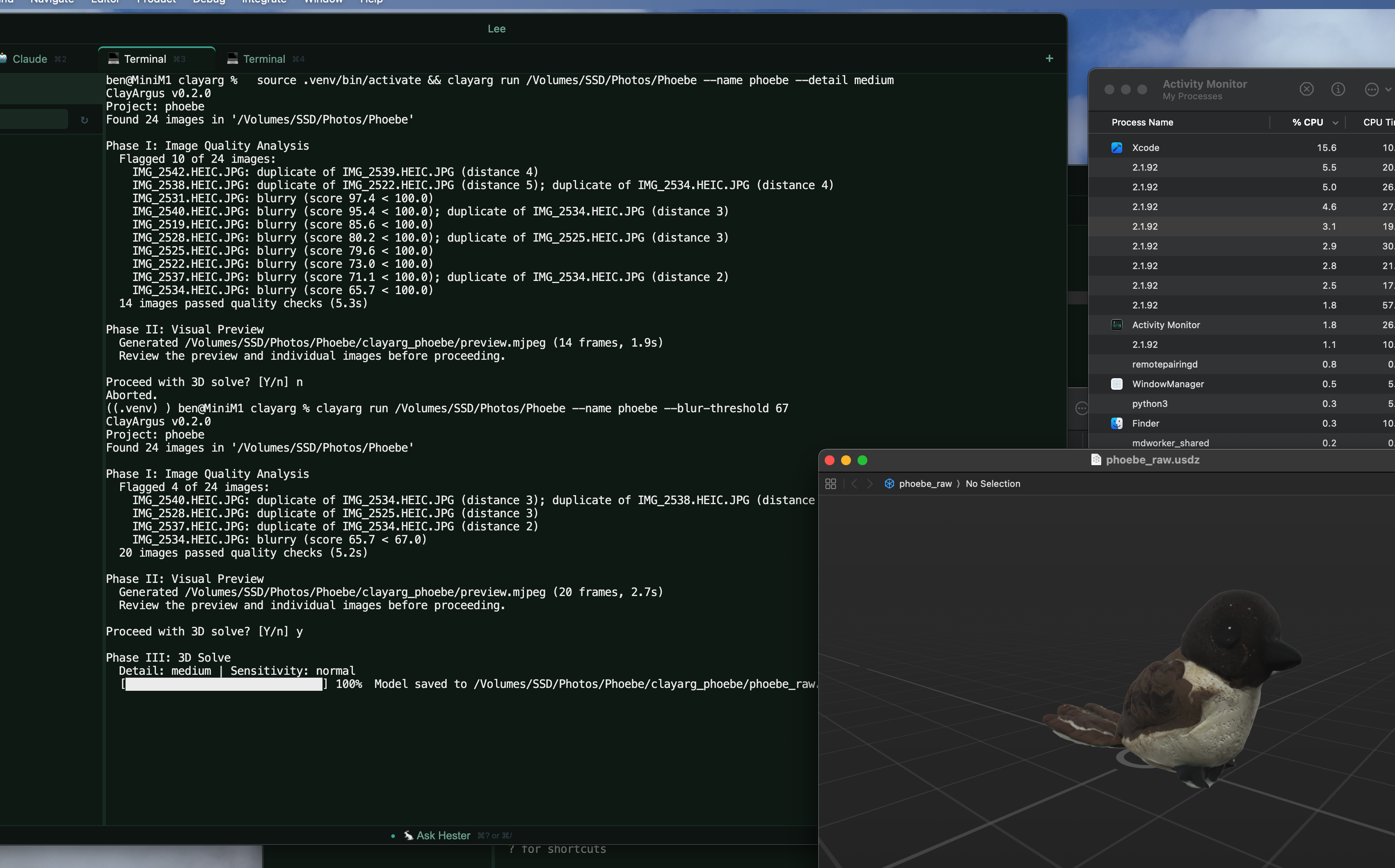
What’s next
The 3D scan gives me a starting shape. Not the final enclosure, but a reference for proportions and form factor.
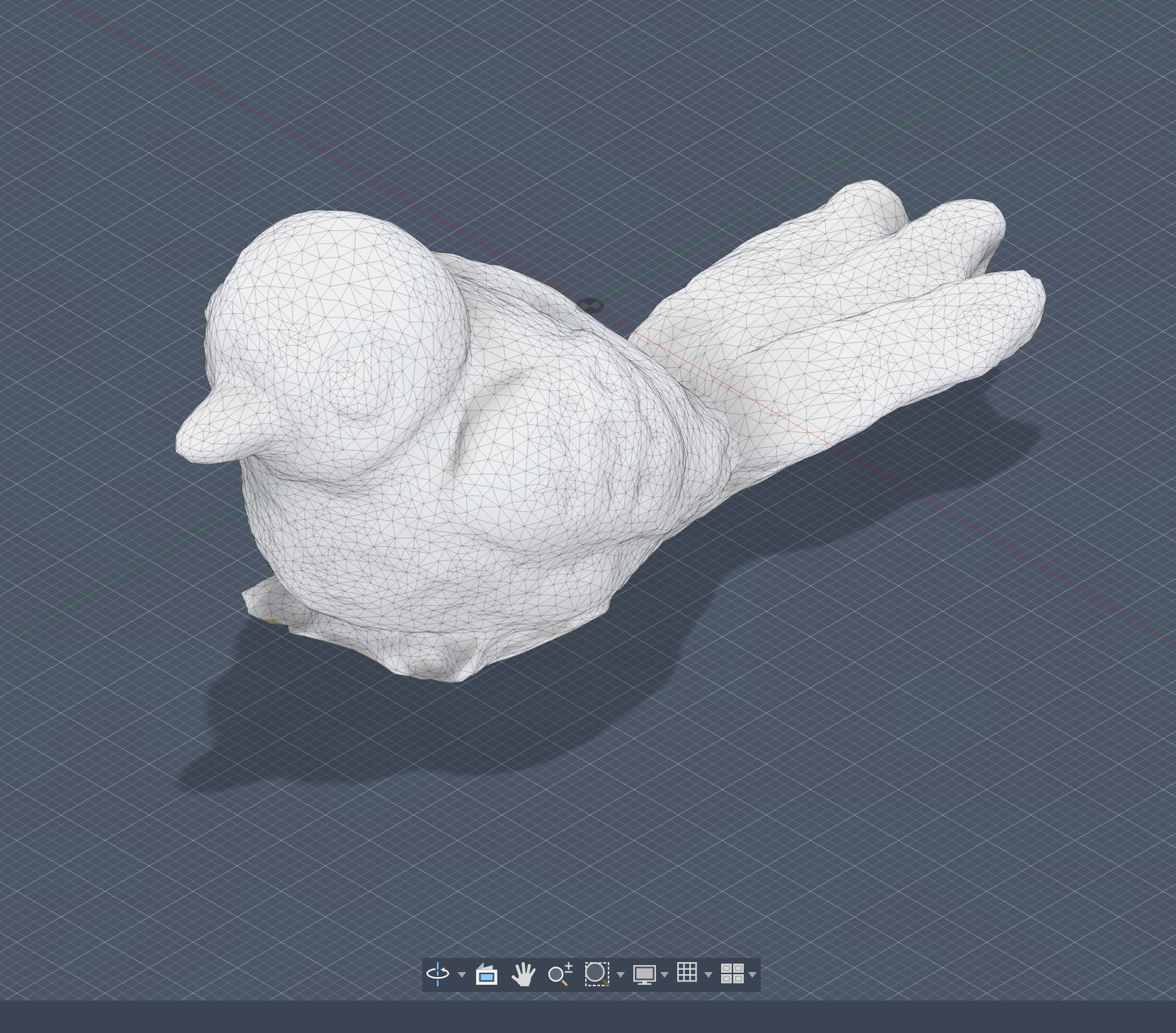
The real work happens in Fusion 360. The bird itself only holds the “airborne” sensors, the ones that smell the air and see the light. It connects to the Perch below, which is a separate housing for the battery and connector ports. I need to hollow the bird out, fit the PCB, design how it mates with the Perch, and figure out how to make the whole thing printable in PETG.
But for the first time, Phoebe looks like a bird. Not a whiteboard sketch, not an ASCII diagram, not a box with wires coming out of it. A bird. My sister made her real.
Easter egg for anyone who noticed the IDE in the screenshots: that’s Lee, a roll-your-own AI IDE I built over the holidays when Anthropic doubled their usage limits. It’s open source. Good luck getting it to run on your machine.
— Ben